
Beating the odds
Six manul kittens and their first precarious months


Happy Manul Monday! This week we have part two of guest-writer Max’s story on the family of Pallas’s cat kittens at Port Lympne Reserve. If you missed his first piece, you can find it here. Since then, Port Lympne has announced names for the kittens, making this a perfect time to return to their story. Huge thanks to Max for sharing this article, along with his phenomenal insights and photos!
While breeding Pallas's cats is famously difficult, keeping kittens alive once born is an even greater challenge. Survival rates in captivity are not much better than in the wild, and often there will be only one or two survivors from a litter of four to six.
But at Port Lympne Reserve in Kent, UK, all six of the kittens born to Namuu and Atlan survived their first precarious months!
To understand this exceptional success, I went to Port Lympne and spoke to Katie Cox, their Head of Small Carnivores.
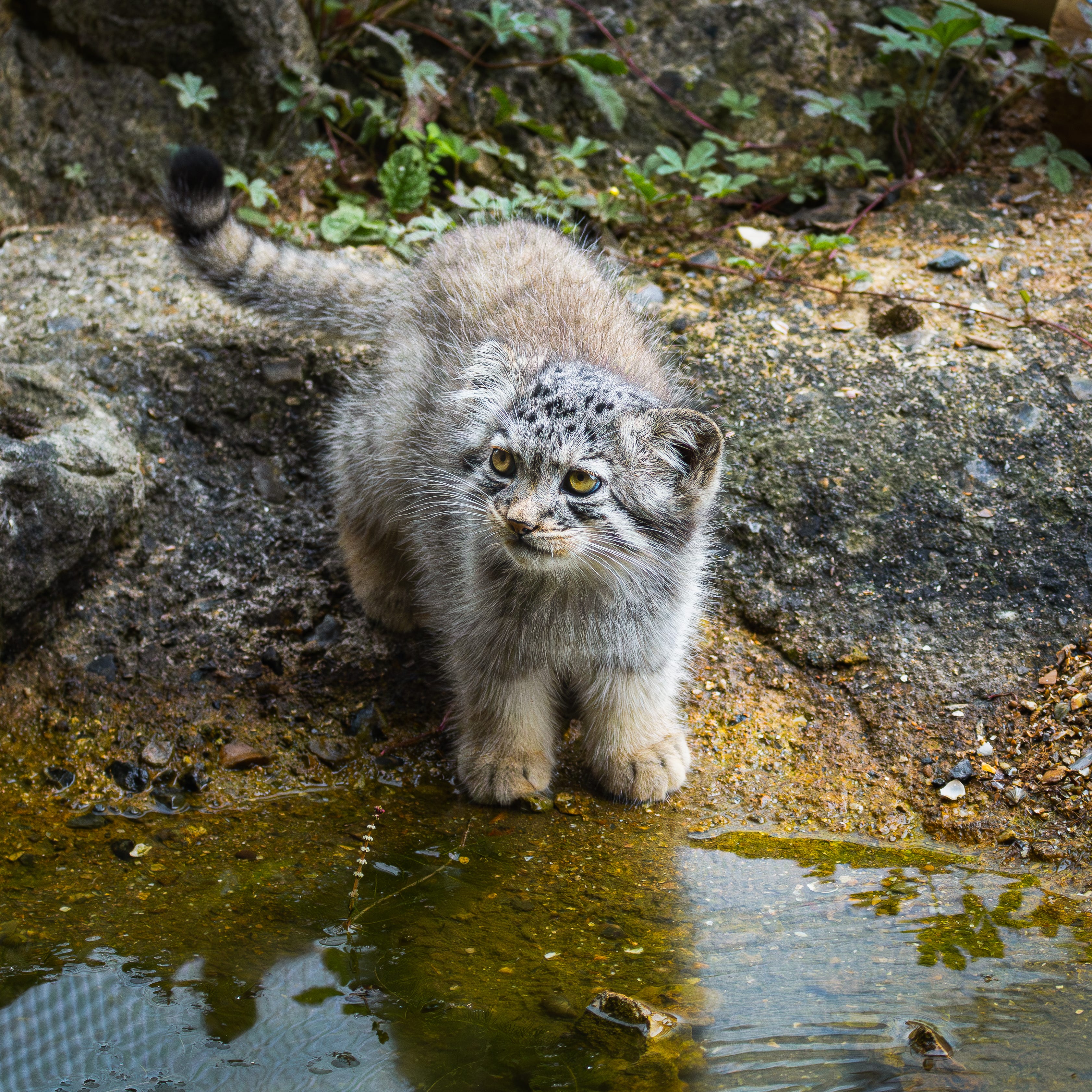
The primary danger for Pallas's kittens is toxoplasmosis, a protozoan infection caused by the parasite Toxoplasma gondii. This parasite can survive in any warm-blooded animal and is commonly found in the cat family, the only creatures in which it can reproduce. But where the toxoplasmosis infection is relatively innocuous to domestic cats, it is frequently lethal to Pallas's kittens.
In fact, toxoplasmosis is such a grave threat that the team at Port Lympne began their prevention plan as soon as they knew Namuu was pregnant, immediately starting her on a course of an antibiotic called clindamycin.
"She had 50mg a day throughout the entire gestation period," says Katie, "so that when the kittens were in utero they were already getting antibodies from her. And then when she gave birth, we continued Namuu's clindamycin so that they got it from her milk as well."
It might sound excessive, but given how vulnerable Pallas's kittens are to toxoplasmosis this caution is well warranted. Namuu herself was one of only two survivors in her litter of four. Poor Atlan was the sole survivor of his litter of five. You can see why Katie and her team were so proactive!
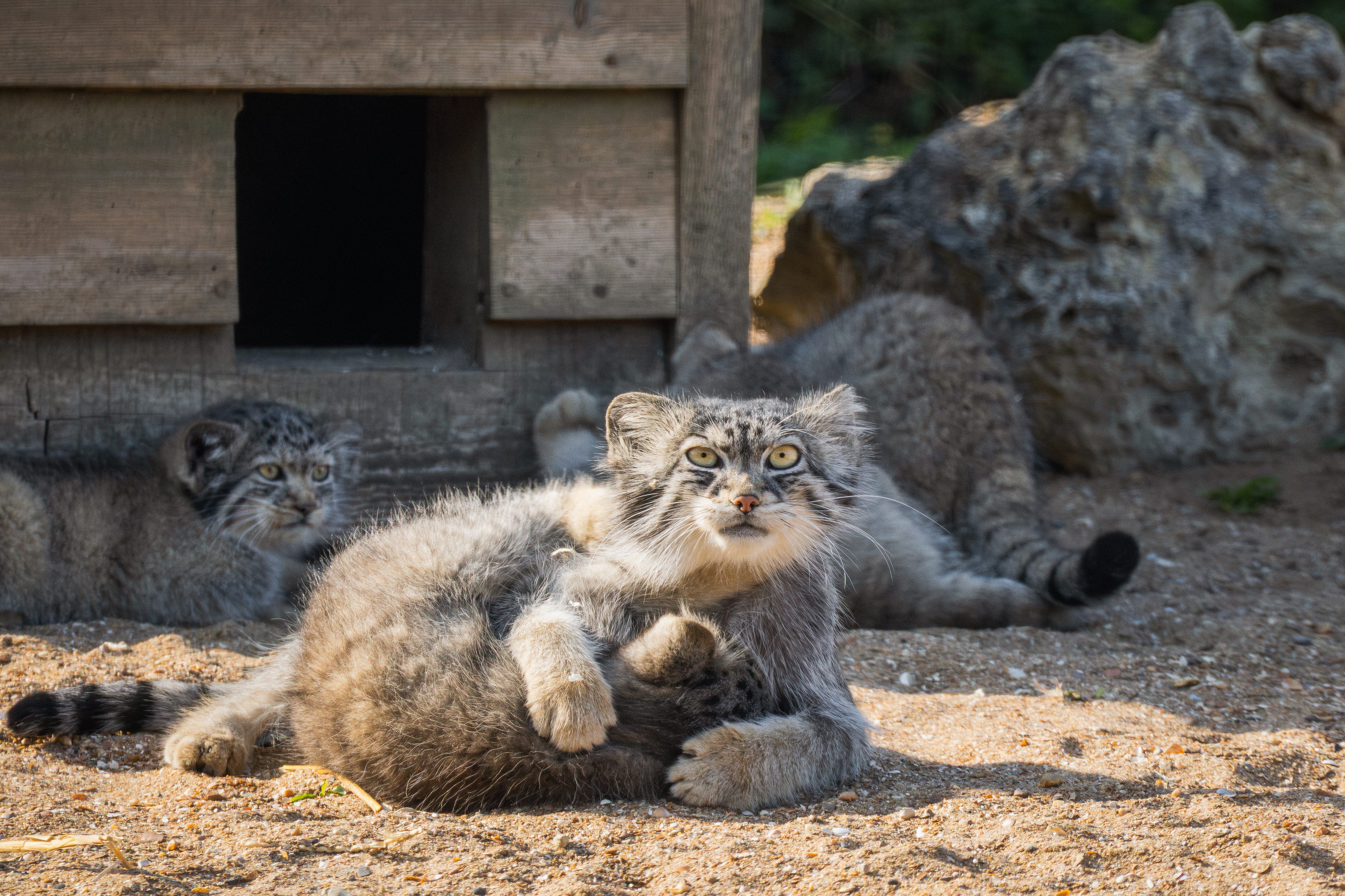
As the kittens began to wean, however, they required their own medication.
"They're on a quarter of the dose that Namuu is on, they're only on 12.5mg," Katie tells me. "It comes in a capsule, so we break open the capsule and put the powder on the food. We found they'll eat it on chick, duckling and quail, so we rotate those three feeds to keep them interested."
But with so many kittens running around, delivering the medication through food isn't easy!
"Yeah, making sure that all of them get their food is a little bit of a headache, especially with six! And there's one that constantly tries to eat mum's food as well..."
As ever, the only solution is hard work. Katie points out the three nest boxes in the enclosure as Ethan Cox, Cover Keeper for the Pallas's cats, brings in their lunch. "Ethan will put the kittens' food in whichever nest box they're in, go around and clean, then he'll go back to make sure that each kitten is eating their share and getting their medication."
Ethan's daily food monitoring and unwavering patience has got the kittens this far, but Katie and the team know that the journey still isn't over.
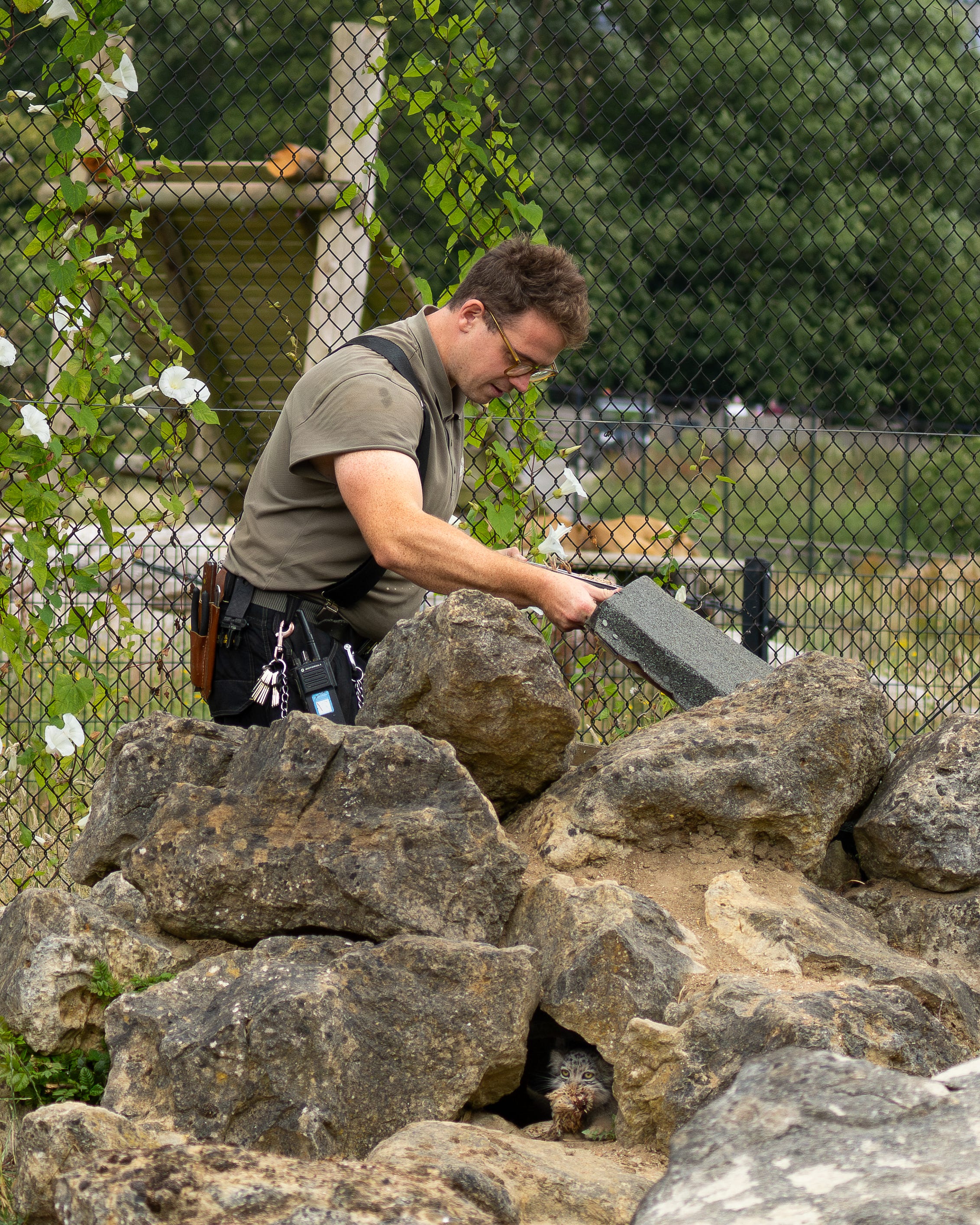
Even now, the threat of toxoplasmosis looms.
"We have to start weaning them off the clindamycin at some point, because if we just end it suddenly they could literally die the next day," Katie says. "So it's a process of weaning them and keeping a careful watch for toxoplasmosis symptoms."
And what exactly are they looking for?
"One of the biggest tells they're about to develop toxoplasmosis is that their pupils will go different directions. Unfortunately, one of the kittens is a little bit cross-eyed anyway, so we're constantly looking at it going, 'Are you a bit more cross-eyed today...?'"
Despite everything, the reality is that they can't fend off the disease forever. "We just want them to be ready for it," says Katie, "so that when they do get it they have a better immune system in place and are able to fight it. Usually when adults fall prone to toxo, it's because there's something age-related going on and their immune systems are suppressed – like heart failure or cancer."
With the dedication of Port Lympne's keepers, these six kittens are being given the best possible chance.
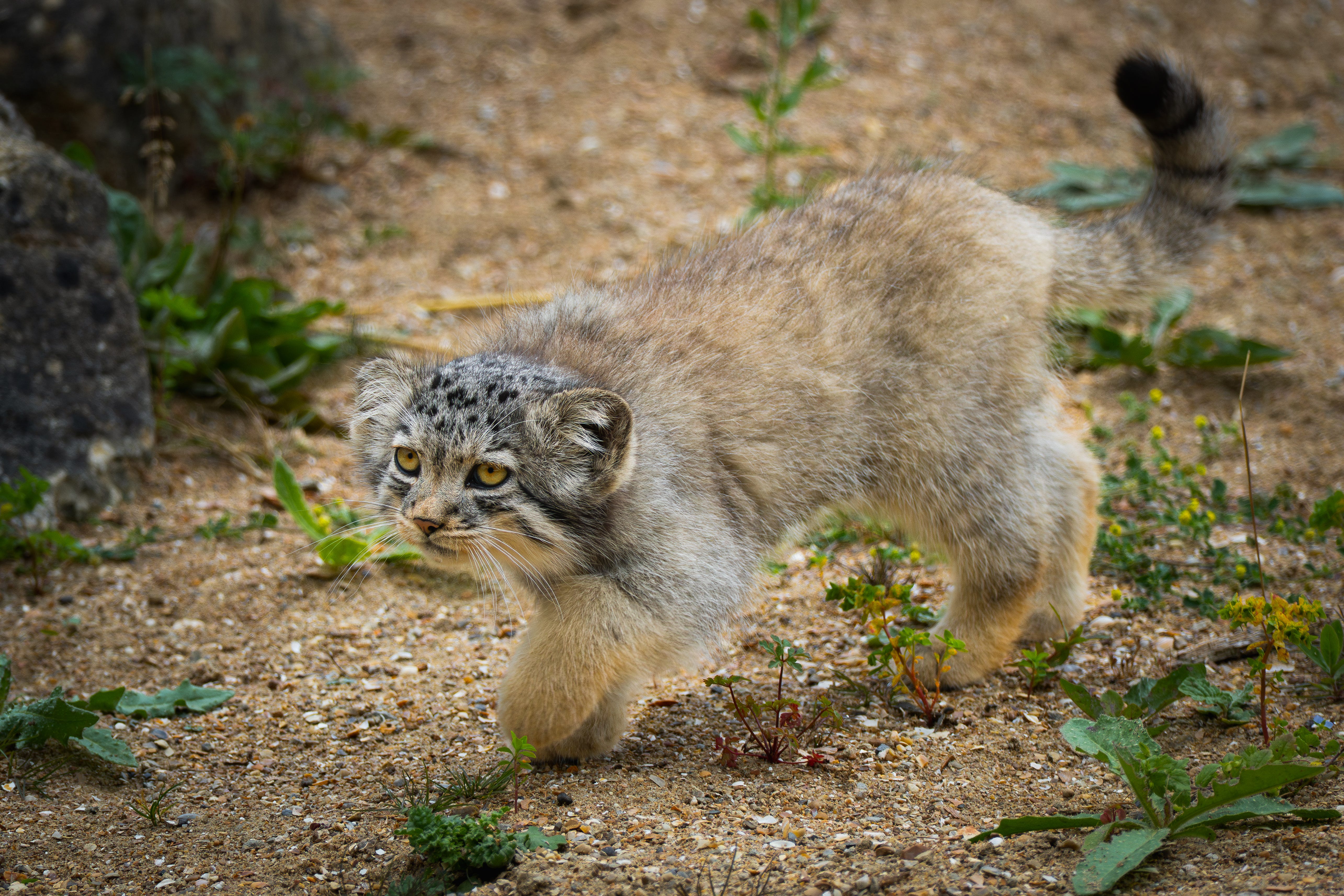
If the level of care that Katie's team are applying seems exceptional, it's because Port Lympne is indeed an exception, and their advantage is embodied in the park's Veterinary Director, Dr. Jane Hopper.
"She's also the Veterinary Chair for the European Felid Taxon Advisory Group," says Katie, "and also for the Pallas's cat studbook. The method of treatment we're using with clindamycin was innovated here at Port Lympne and over at Howletts [their sister-zoo]. We're very lucky that we have a whole veterinary department just for ourselves – a lot of other parks don't have in-house vets at all and have to rely on external vets. If the external vet isn't in the loop, then they might not know about Pallas's cats and toxoplasmosis."
Having such an eminent veterinarian on staff is unique, and while other parks don't have direct access to Dr. Hopper's expertise, they might still benefit from her work.
"We're hoping the fact that she's the Veterinary Chair for the Pallas's cat studbook means that our method can start going across to other places," says Katie. "Some places don't go the medication route, and then they end up with two kittens left out of six, or one, or sometimes none at all. Whereas, this is the first time we've used this medication programme and the fact that we've had all six kittens survive like this shows it's worth the effort, it's worth the stress. It works!"
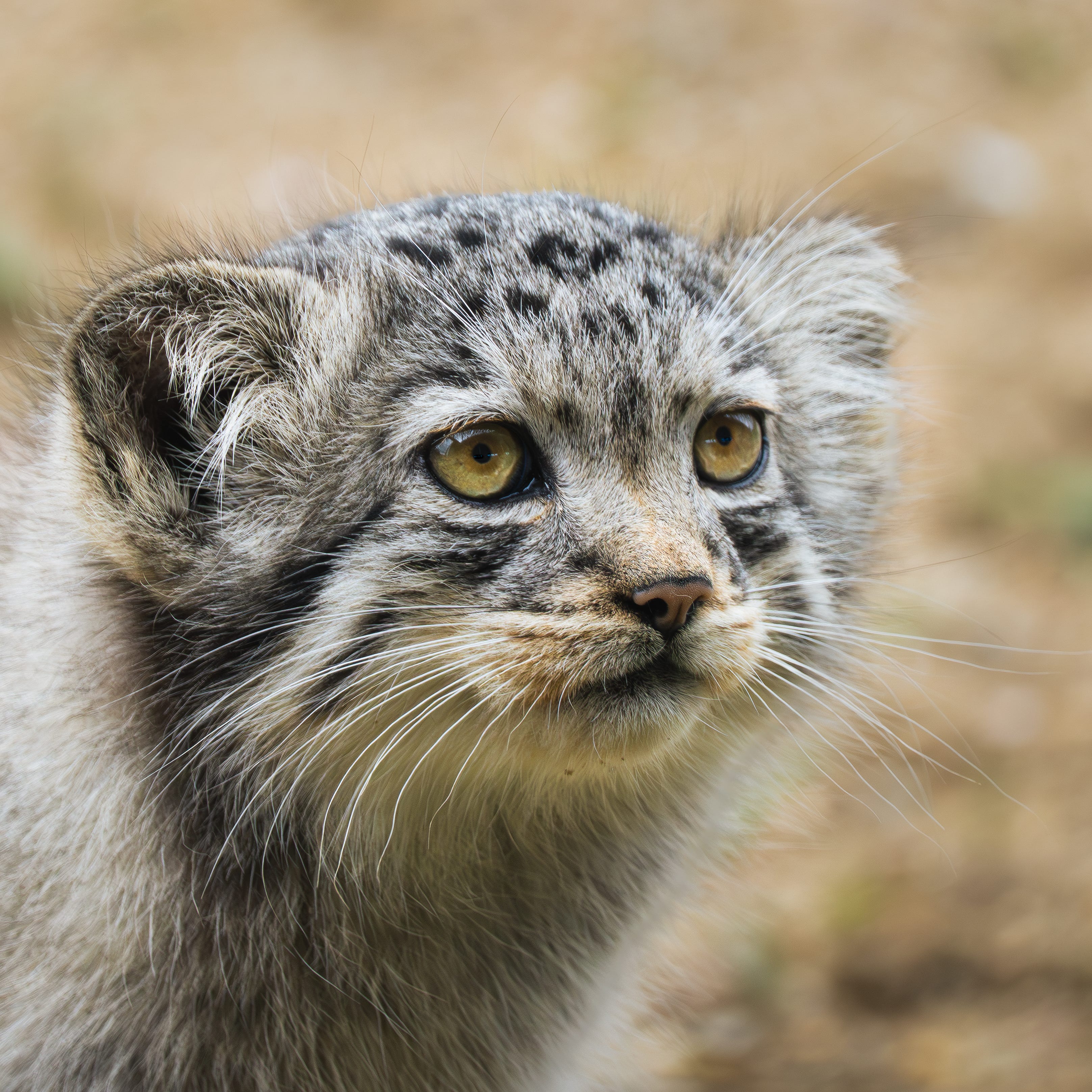
Protecting these six darting bundles of fur through the first, perilous stage of their life is not glamorous work. It's taken Katie, Ethan and their team months of daily, hands-on labour and quiet determination, as well as the trailblazing expertise of Dr. Jane Hopper.
Where it is commonly expected to lose at least half of each Pallas's cat litter in the first few weeks, the incredible staff at Port Lympne have truly earned their extraordinary success with these six healthy kittens.
Katie and Ethan take a few moments after their work to join me in the viewing hut and watch the kittens playing.
"Seeing the kittens is such a perk to everyone's day," Katie says. "They all work so hard, such long hours, and then they come across and they see these little guys. It's a reaffirmation of why we do it."
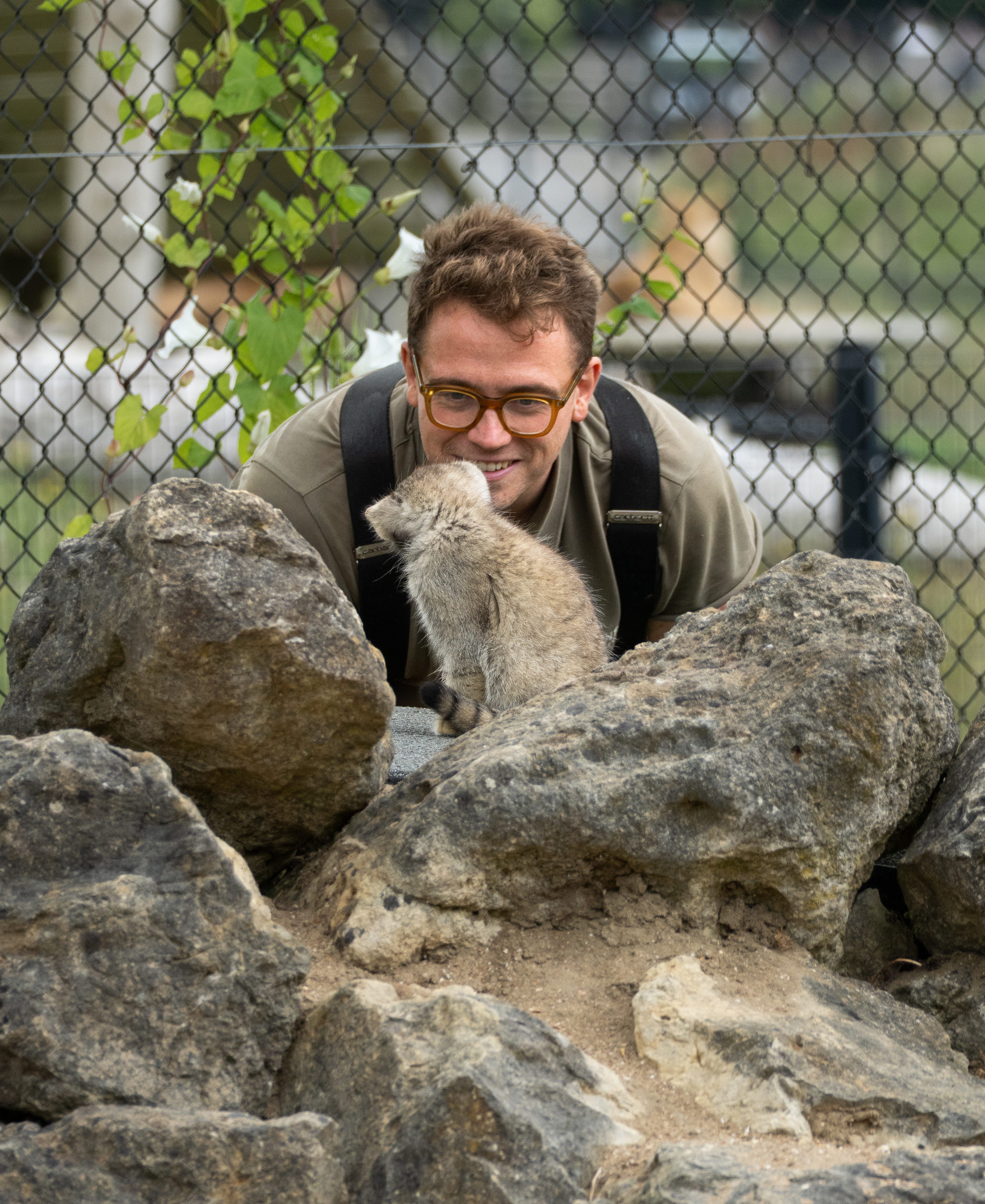
 | A guest post by
|
What excellent manul Monday news! Fingers crossed for these lovely kittens as they wean off the meds in the future
That's excellent news! Thank you for all the hard work to keep these precious babies around! I wish them the best of luck! They're beautiful. ♥